


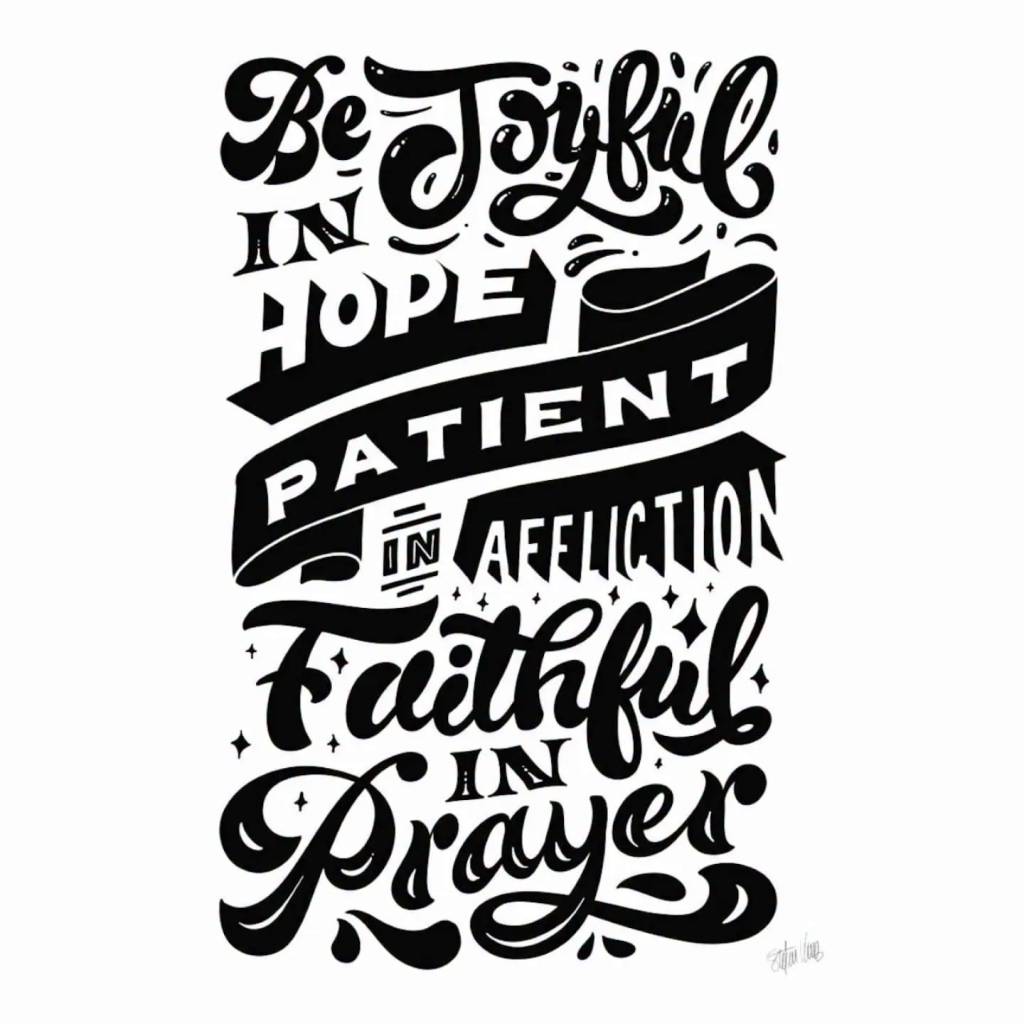
“Be joyful in hope, patient in affliction, faithful in prayer.” — Romans 12:12
Have you ever watched an oak tree during a storm?
The branches bend. The leaves whip in every direction. Rain pours, thunder rolls, and from a distance it almost looks as though the tree might break.
But beneath the surface, something unseen is holding it steady.
Its roots.
Our lives can feel a lot like that. There are seasons when prayers seem unanswered, diagnoses come unexpectedly, relationships feel strained, finances are tight, or grief settles in. The wind isn’t a sign that God has abandoned us. Sometimes it’s simply the season in which our roots grow deeper.
Romans 12:12 gives us three anchors for every season:
 Be joyful in hope. Our joy isn’t found in perfect circumstances but in a perfect Savior who keeps every promise. Hope looks ahead with confidence because Christ has already won the victory.
Be patient in affliction. Patience isn’t pretending life doesn’t hurt. It is choosing to trust that God is still working, even when we cannot yet see what He is doing. The waiting room of life is often where He shapes our character the most.
Be faithful in prayer. Prayer is more than bringing God a list of needs. It is abiding with our Father, allowing Him to steady our hearts, redirect our thoughts, and remind us that we never carry our burdens alone.
The strongest believers aren’t always those with the easiest lives—they’re often the ones who kept showing up before God when the storm wouldn’t stop.
Today, wherever you find yourself, don’t give up. Sink your roots a little deeper. Hold tightly to hope. Endure with patience. Keep praying.
The storm will not have the final word.
Jesus will.
 We’d love to pray with you. If there’s something weighing on your heart today, leave a comment or send us a message. Our prayer team would be honored to stand with you.
Have you ever watched an oak tree during a storm?
The branches bend. The leaves whip in every direction. Rain pours, thunder rolls, and from a distance it almost looks as though the tree might break.
But beneath the surface, something unseen is holding it steady.
Its roots.
Our lives can feel a lot like that. There are seasons when prayers seem unanswered, diagnoses come unexpectedly, relationships feel strained, finances are tight, or grief settles in. The wind isn’t a sign that God has abandoned us. Sometimes it’s simply the season in which our roots grow deeper.
Romans 12:12 gives us three anchors for every season:
Be joyful in hope. Our joy isn’t found in perfect circumstances but in a perfect Savior who keeps every promise. Hope looks ahead with confidence because Christ has already won the victory. Be patient in affliction. Patience isn’t pretending life doesn’t hurt. It is choosing to trust that God is still working, even when we cannot yet see what He is doing. The waiting room of life is often where He shapes our character the most. Be faithful in prayer. Prayer is more than bringing God a list of needs. It is abiding with our Father, allowing Him to steady our hearts, redirect our thoughts, and remind us that we never carry our burdens alone.The strongest believers aren’t always those with the easiest lives—they’re often the ones who kept showing up before God when the storm wouldn’t stop.
Today, wherever you find yourself, don’t give up. Sink your roots a little deeper. Hold tightly to hope. Endure with patience. Keep praying.
The storm will not have the final word.
Jesus will.
We’d love to pray with you. If there’s something weighing on your heart today, leave a comment or send us a message. Our prayer team would be honored to stand with you.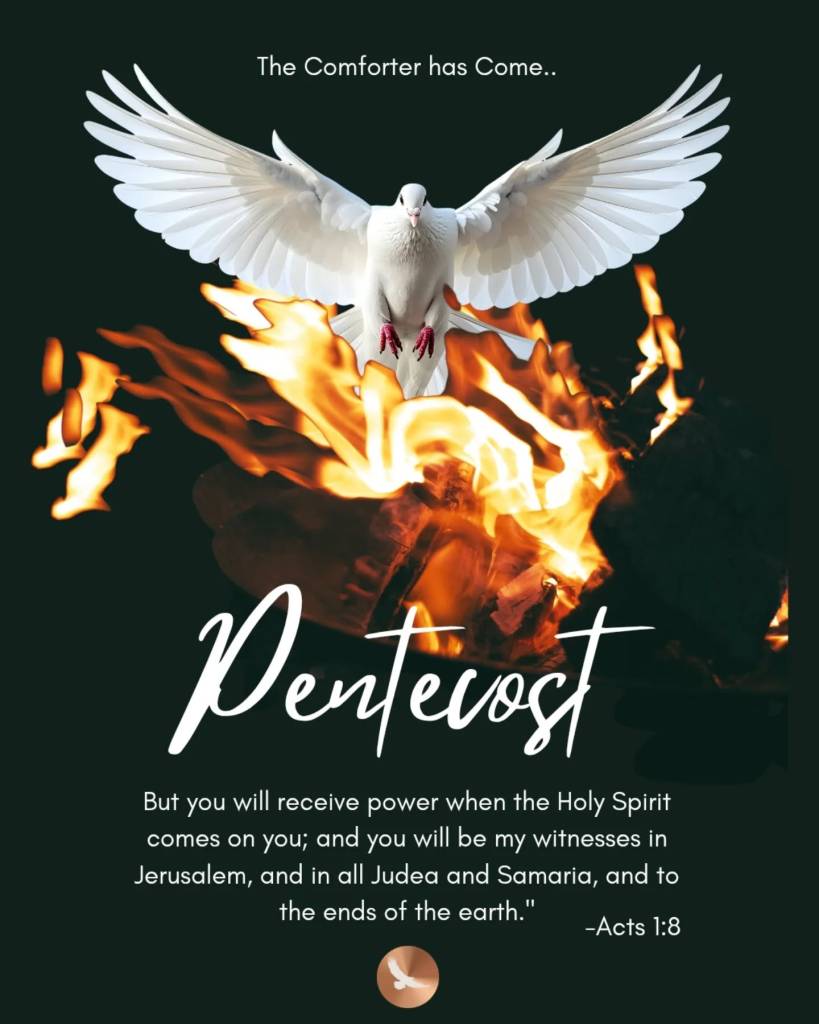
Ascension Day
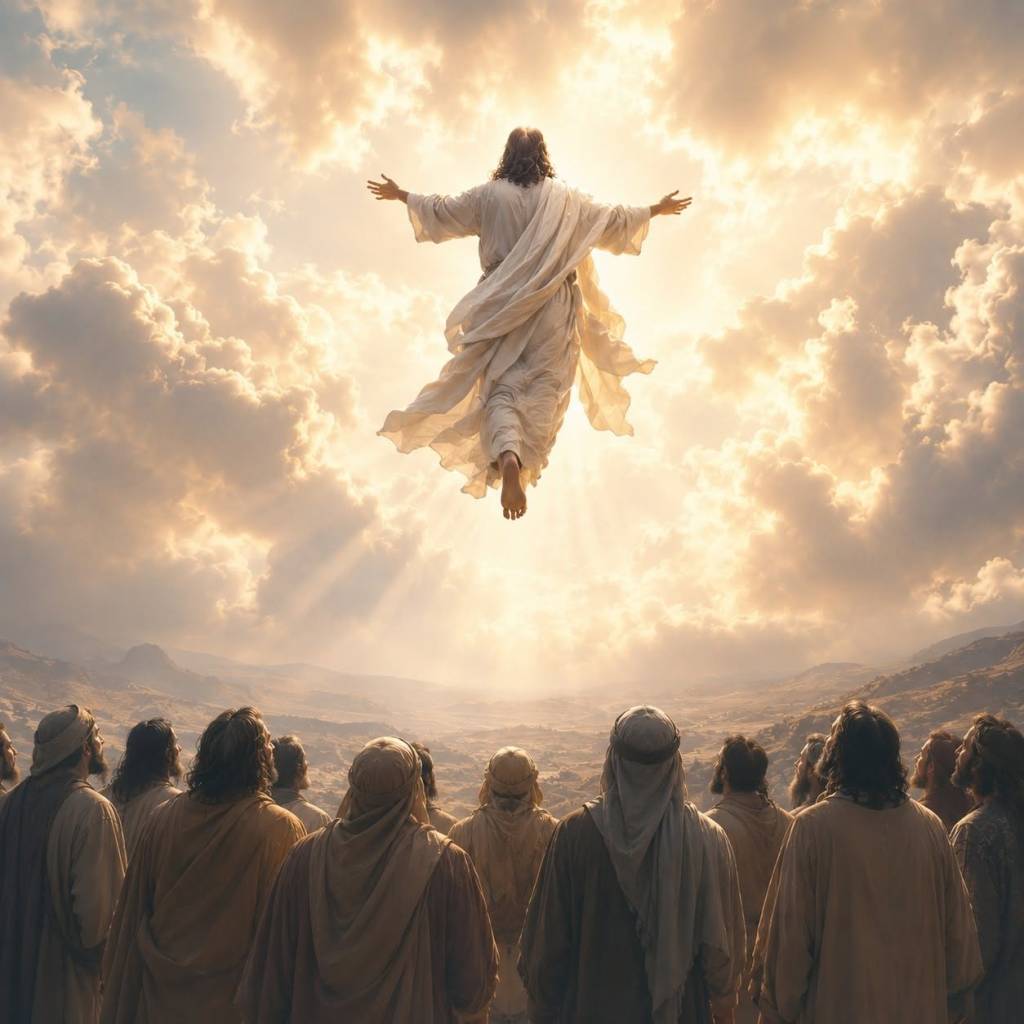
Forty days after His resurrection, Jesus ascended into heaven before His disciples’ eyes. But Ascension Day is not about Jesus leaving — it is about Jesus reigning.
Christ’s ascension reminds us that He is seated at the right hand of the Father, victorious over sin and death, interceding for His people, and preparing the way for His return.
The disciples watched Him go with awe, but they were not left without hope. Jesus promised the Holy Spirit would come, empowering believers to carry the Gospel to the ends of the earth.
Ascension Day calls us to lift our eyes higher — beyond fear, distraction, and temporary things — and remember that our King reigns now.
“He was taken up before their very eyes, and a cloud hid Him from their sight.”
— Acts 1:9 Jesus ascended.
 Jesus reigns.
 Jesus will return.


Good Friday is not gentle.
It is the collision of justice and mercy.
Isaiah saw this moment long before it happened: “He was pierced for our transgressions… crushed for our iniquities… and by His wounds we are healed.” (Isaiah 53:5)
Crucifixion was not just death—it was public shame, prolonged suffering, and exposure.
Scripture says: “Cursed is everyone who hangs on a tree.” (Deuteronomy 21:23)
Let that land.
He didn’t just die…
He entered into the curse.
And as He hung there— “From the sixth hour until the ninth hour there was darkness over all the land.” (Matthew 27:45)
Midday.
The sun should have been at its highest.
Instead—darkness.
Creation itself responding.
Light withdrawing.
As if the world could not fully look at what was happening.
Jesus cries out:
“It is finished.” (John 19:30) The Hebrew word Tetelestai (τετέλεσται) means paid in FULL, brought to completion.
We say “Jesus died for our sins.”
But most people have no idea what that actually means.
Sin is not a personality flaw. It is a debt.
“The wages of sin is death.” (Romans 6:23) Not metaphorical death.
Actual, required, justice-demanding death.
So when Jesus is crucified, this is not poetic. This is payment.
“He Himself bore our sins in His body on the tree…” (1 Peter 2:24)
When He says:
“It is finished.” That means there is nothing left to pay.
And even more….
“The curtain of the temple was torn in two, from top to bottom.” (Matthew 27:51)
TOP to bottom. GOD did it.
That curtain was not thin—it was massive, woven thick, guarding the Holy of Holies in the temple.
No one walked in there… except once a year… but only with blood.
But now? It is open to YOU.
Not because sin didn’t matter—
but because it was fully dealt with.
The debt wasn’t ignored.
It was paid.
And even the sun went dark to mark the moment.
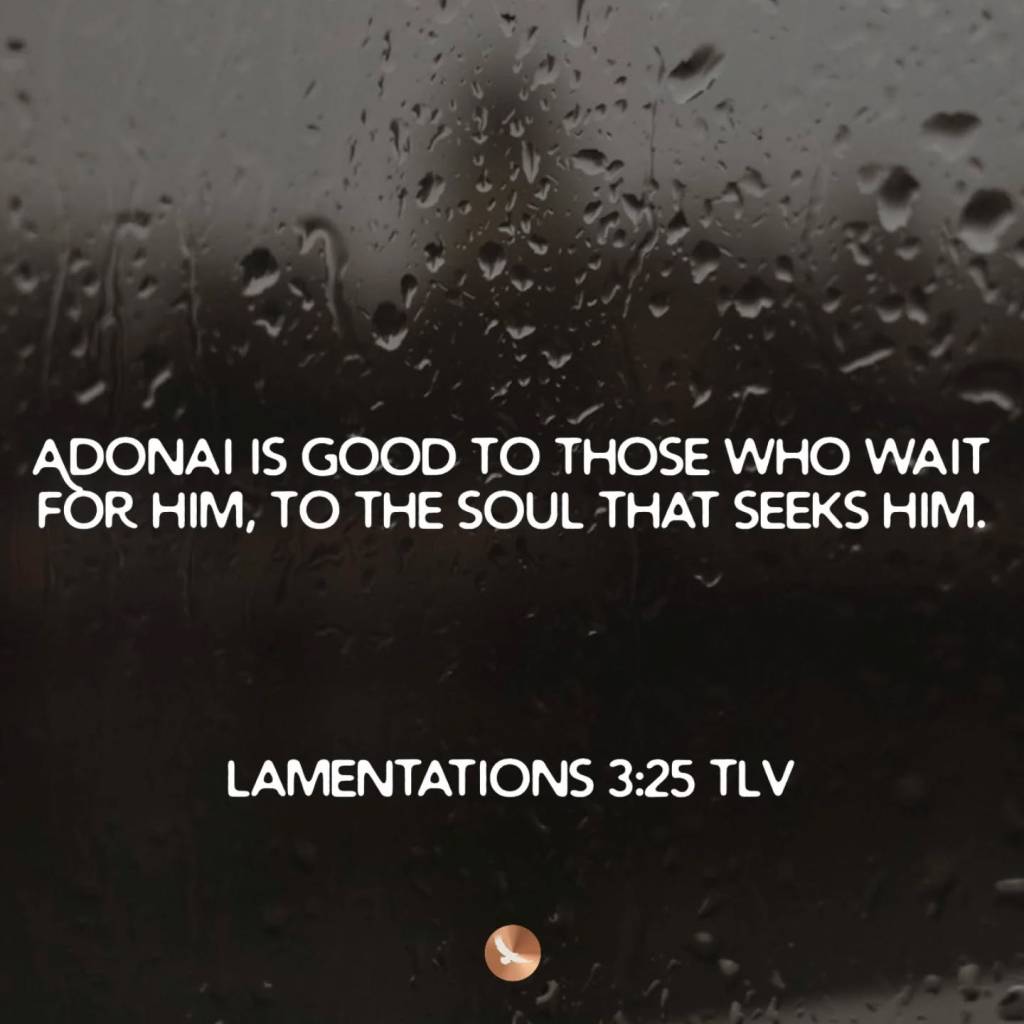

“I pray that the sharing of your faith may become effective as you fully understand every good thing we have in Christ.” — Philemon 1:6
Your faith doesn’t need to be loud to be powerful.
It doesn’t need to be polished to be effective.
When you live fully aware of the good God has already placed within you—His grace, His truth, His love—it naturally overflows. Through your words. Through your patience. Through your integrity. Through the way you show up when it would be easier not to.
The world doesn’t need more noise.
It needs believers who know what they carry.
Walk confidently today, not striving to prove your faith, but resting in Christ and letting His goodness shine through you—right where you are.
Your life IS the testimony.
Your faith doesn’t need to be loud to be powerful.
It doesn’t need to be polished to be effective.
When you live fully aware of the good God has already placed within you—His grace, His truth, His love—it naturally overflows. Through your words. Through your patience. Through your integrity. Through the way you show up when it would be easier not to.
The world doesn’t need more noise.
It needs believers who know what they carry.
Walk confidently today, not striving to prove your faith, but resting in Christ and letting His goodness shine through you—right where you are.
Your life IS the testimony.

Mercy: The Father Who Runs
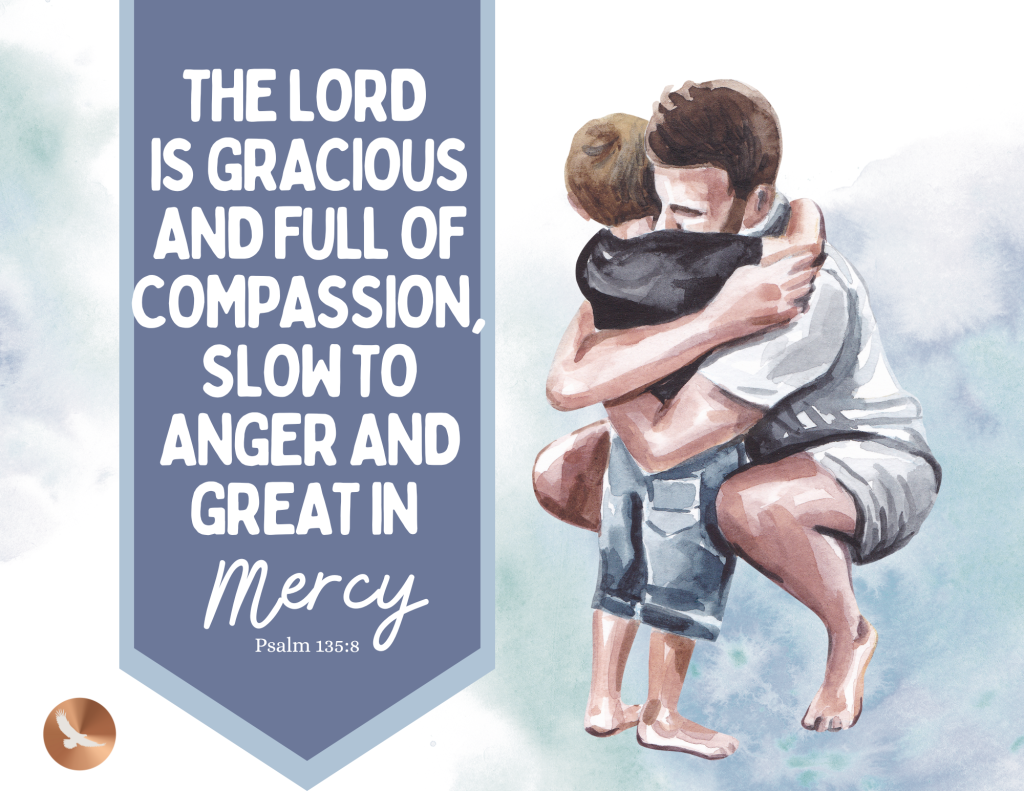
When Jesus told of the prodigal son, He painted a picture of mercy in motion. A son, reckless and proud, demands what isn’t yet his — and squanders it all in a distant land. When the famine hits, so does the truth: he’s empty, filthy, and far from home. But in his hunger and humiliation, something shifts — pride breaks, and repentance begins. He turns his face toward home, rehearsing words of sorrow. And while he’s still a long way off, his father sees him — and runs. (Luke 15:20)
In that culture, historically a man of honor didn’t run. And a son who had shamed his family could expect exile, even stones. But the father doesn’t wait for perfection; he runs at the first glimpse of repentance. He gathers up his robes and races forward — to shield his son from judgment, to cover his shame, to restore what humility had begun to heal.
Mercy always runs first — the repentant heart opens the way. The father’s embrace wasn’t earned in action; it was received through surrender and humility. The robe, the ring, the feast — not rewards for words spoken, but celebrations of a heart returned.
This is the heartbeat of God. “The Lord is gracious and full of compassion, slow to anger and great in mercy” (Psalm 145:8). He isn’t scanning the horizon for perfect penance — He’s watching for humility. And when He sees even a flicker of it, He runs — joyfully, powerfully, to pull you close.
Mercy doesn’t excuse rebellion; it redeems repentance. It wraps us in grace, restores our place, and whispers, “You’re home.”
No matter how far you’ve wandered, know this: the Father still runs.
“But God, being rich in mercy, made us alive with Christ even when we were dead in sin.” — Ephesians 2:4–5
Compassion: The Hands That Heal
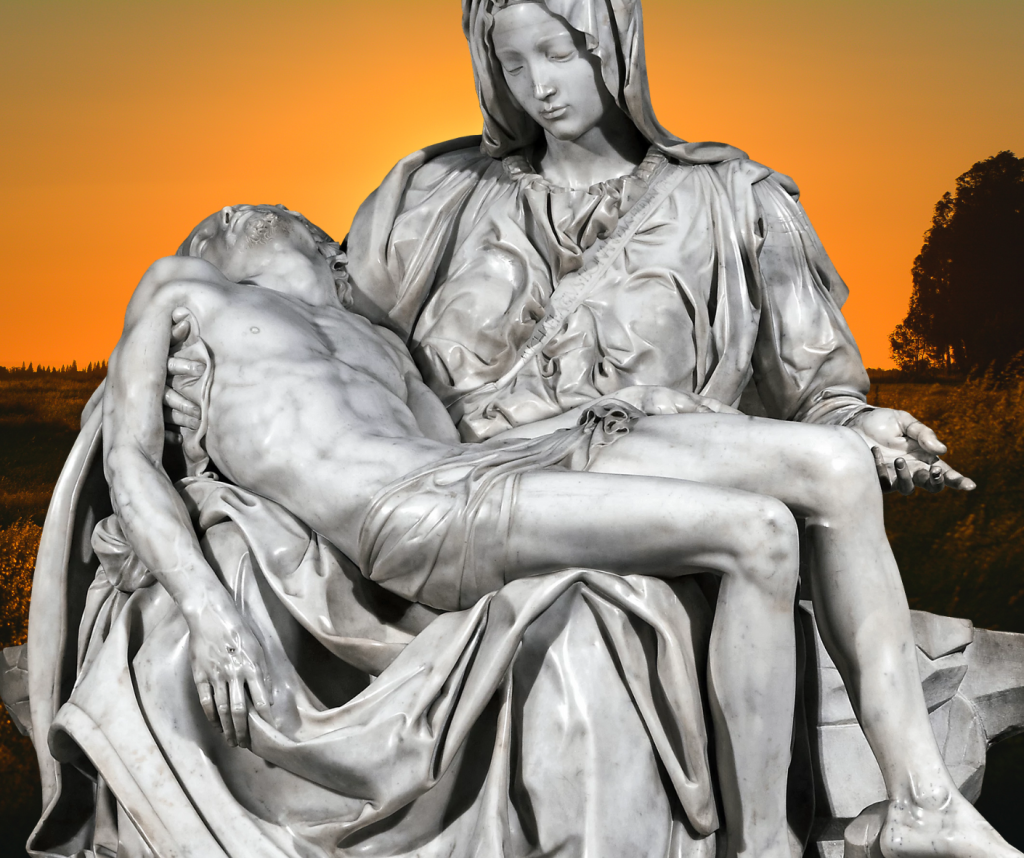
When Michelangelo sculpted Pietà, he captured Mary cradling Jesus after the cross — sorrow and love carved into stone. Her hands are what draw you in. They’re not clenched in grief, nor limp in despair, but open and steady. Those hands don’t turn away from pain; they hold it with holy tenderness.
That is what compassion does. It doesn’t look away from suffering; it leans in. Jesus did this again and again — when He touched the leper, when He healed the blind, when He wept at Lazarus’ tomb. Compassion is the rhythm of His heart made visible through His hands.
“When He saw the crowds, He had compassion on them, because they were harassed and helpless, like sheep without a shepherd” (Matthew 9:36).
We live in a world that rushes past the wounded, hurrying to comfort the comfortable. But compassion slows down. It stops on the side of the road, like the Good Samaritan, and binds up the broken even when it costs time, money, or reputation.
To be Christlike is to touch what others avoid. To let your heart ache when it would be easier to stay numb. Compassion doesn’t fix every wound — it reminds the hurting they’re not forgotten.
Your hands might not carve marble, but they can still sculpt something eternal when they reach toward another with love.
“Be kind and compassionate to one another, forgiving each other, just as in Christ God forgave you.” — Ephesians 4:32 
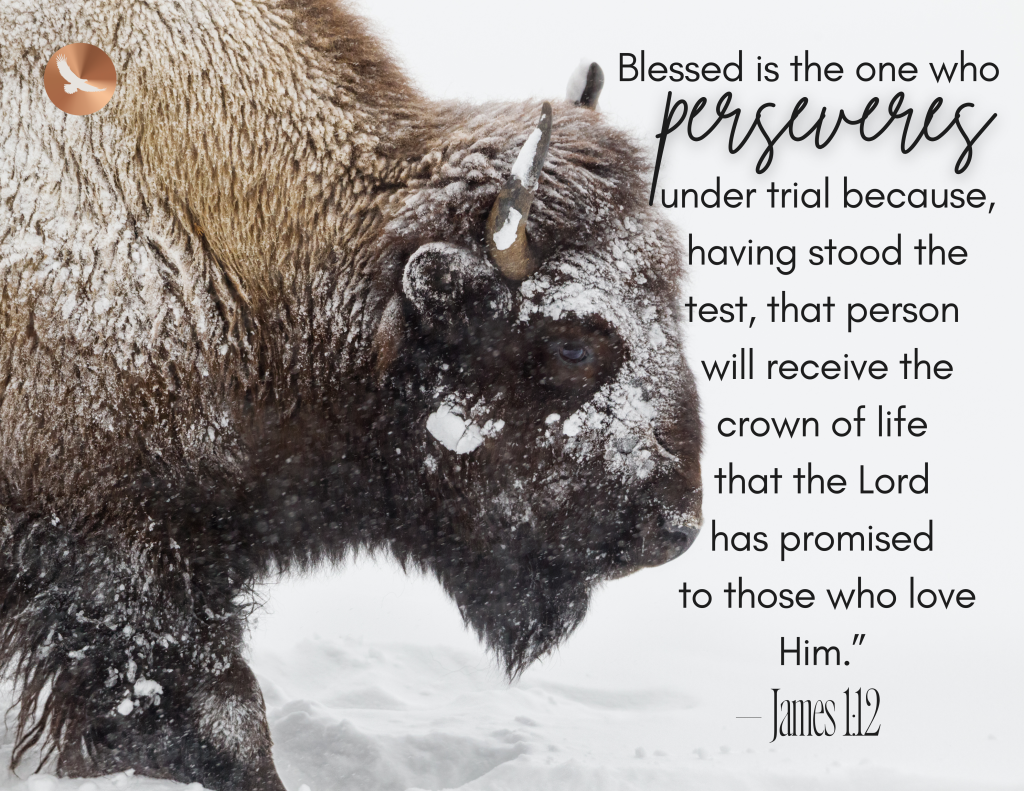
Perseverance: Through the Storm with God
When storms roll across the plains, most animals run from them — chasing the illusion of escape. But buffalo do something extraordinary. They turn toward the dark clouds, lower their heads, and walk straight through. It’s not instinct born of fear, but of wisdom — because the fastest way through a storm is to face it.
That’s perseverance. It’s not pretending the thunder doesn’t shake you. It’s choosing to walk forward with God, even when the sky splits open. It’s what the Apostle Paul meant when he said, “We glory in our sufferings, because we know that suffering produces perseverance; perseverance, character; and character, hope” (Romans 5:3–4).
Buffalo don’t walk through storms because they enjoy them. They walk through because they know there’s peace on the other side. Likewise, faith doesn’t deny the wind — it anchors deeper when it blows. God doesn’t always remove the storm, but He never leaves you to walk it alone. The same Spirit that calmed the waves still whispers, “Do not be afraid, I am with you.”
When the clouds gather over your life — the diagnosis, the betrayal, the disappointment — remember this: running only prolongs the rain. Facing it with God brings you through to sunlight sooner. Perseverance isn’t about speed; it’s about trust.
So, lift your head like the buffalo. Set your face toward the storm. Let the presence of God be your covering. Because the same wind that once threatened to break you will one day testify that you endured.
“Blessed is the one who perseveres under trial because, having stood the test, that person will receive the crown of life that the Lord has promised to those who love Him.” — James 1:12 

 International Coffee Day Reflection
There’s a story about three things placed into the same boiling water:
 The carrot went in strong, but it came out soft and weak.
 The egg went in fragile, but it came out hard and unyielding.
The coffee, though, did something different—it changed the water itself.
The carrot went in strong, but it came out soft and weak. The egg went in fragile, but it came out hard and unyielding. The coffee, though, did something different—it changed the water itself.Life can feel like boiling water—trials, struggles, heat all around us. We have a choice:
- We can let hardship make us weak like the carrot.
- We can let pain harden our hearts like the egg.
- Or, like the coffee, we can allow Christ in us to transform the environment around us.
Romans 12:2 reminds us: “Do not be conformed to this world, but be transformed by the renewal of your mind…”
On International Coffee Day, I want you to take a moment and rest in the Lord and truly think how we can allow the presence of Jesus in us change the “water” of our homes, our workplaces, and our communities.
So today, when you sip your coffee, remember: You carry the Living Water within you. And that changes everything. 


Guarded by His Peace
“And the peace of God, which surpasses all understanding, will guard your hearts and your minds in Christ Jesus.” — Philippians 4:7 (ESV)
There is a kind of peace the world can’t offer—a peace that makes no sense in the middle of chaos. This peace doesn’t come from everything going right; it comes from knowing the One who holds everything in His hands.
God’s peace stands guard over our hearts like a faithful soldier. Fear may knock, but peace says, “Not today.” Anxiety may whisper, but peace silences it with truth. This peace is not something we earn; it’s a gift from our Father, rooted in trust and prayer.
 Pause and Reflect:
- Where do I need God’s peace to guard my heart today?
- Am I handing my worries to Him in prayer, or holding them tight?
Prayer:Lord, thank You for the gift of Your peace. Guard my heart and mind from fear and anxiety. Help me to trust You so deeply that Your peace fills every corner of my soul. Amen.
Choosing the Ancient Paths
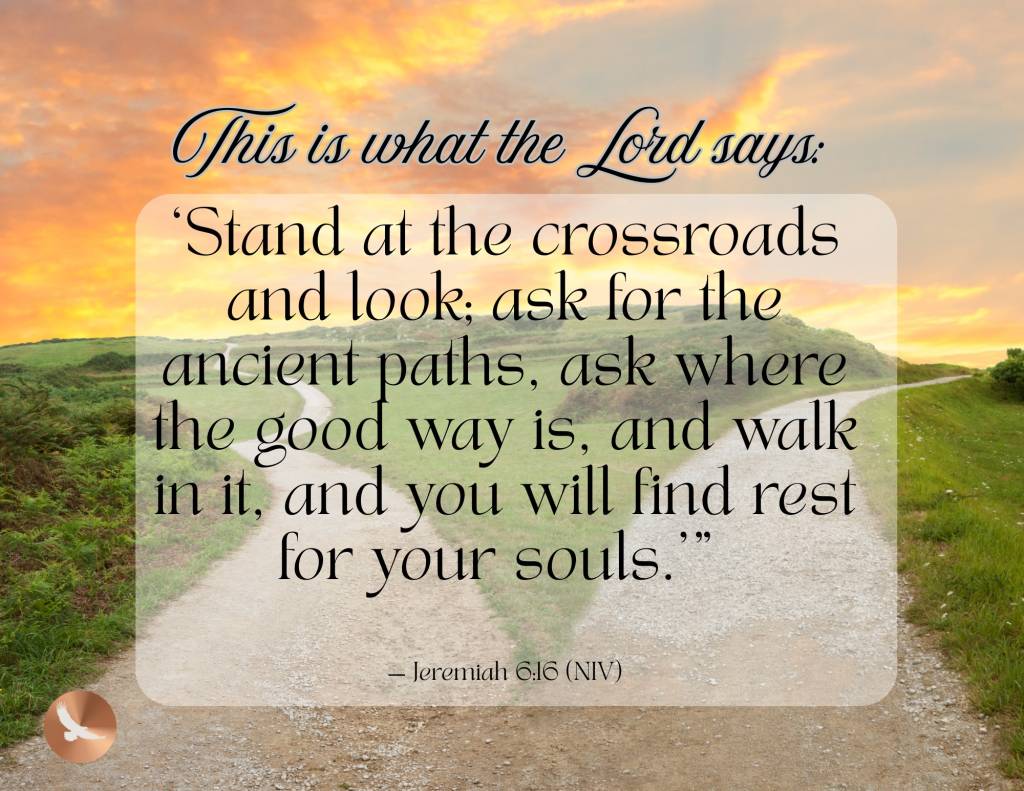
“This is what the Lord says: ‘Stand at the crossroads and look; ask for the ancient paths, ask where the good way is, and walk in it, and you will find rest for your souls.’” — Jeremiah 6:16 (NIV)
Every day we stand at countless crossroads—moments where we must choose how to think, respond, and live. In a world constantly shifting its values and redefining truth, it can be easy to get swept along with popular opinions, trends, or fears.
But God invites us to pause. To stop at the crossroads. To look—not at what is flashy or new—but at what is true and timeless. He calls us to ask for the ancient paths, the ways that lead to life. These are the ways rooted in His Word, His character, and His promises.
When we walk in His ways, even when they go against the flow of culture, we discover something this world can’t give: rest for our souls. His paths are not outdated—they are eternal. They lead us to peace, purpose, and stability, even in turbulent times.
Pause and Reflect:- What crossroads am I standing at today?
- Have I paused long enough to ask God where the good way is?
- What would it look like to choose His way, even if it’s unpopular?
Prayer:Lord, help me to stop rushing through life and instead stand still before You. Show me the ancient paths—Your paths—and give me the courage to walk in them. May my thoughts be anchored in Your truth, not swayed by the noise of the world. Amen.
God Our Provider
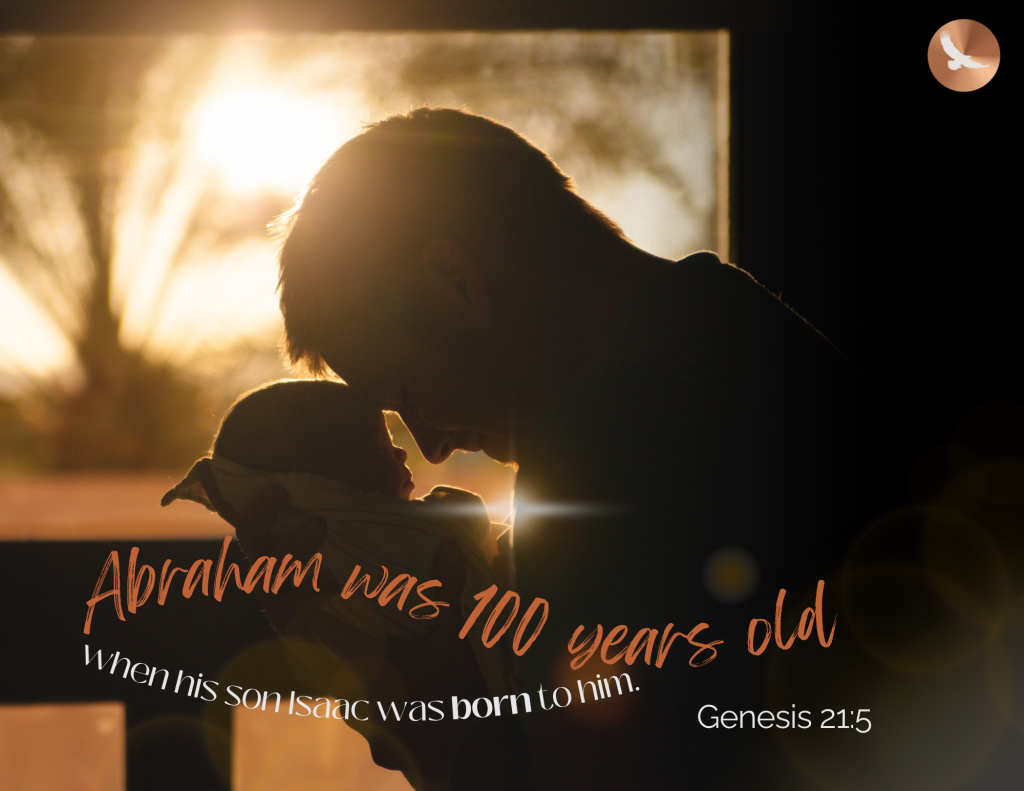
Abraham was 100 years old when Isaac was born (Genesis 21:5). From a human perspective, this was beyond impossible. Abraham and Sarah were well past the age of having children, and yet, God’s promise still stood. What seemed hopeless in their eyes was perfectly possible in His hands.
How often do we look at our circumstances and feel like there is no way forward? We wonder how a bill will get paid, how healing will come, how a relationship will be restored, or how a door will ever open. But the story of Abraham reminds us—what feels overwhelmingly impossible to us is not impossible to God and surrendering to his will and his plan can bless us and show His power and faithfulness.
Does the outcome always look like what we envision, expect, or request. No, His plan for us often is fullfilled in a befuddling way, like blessing a 100 year old man with a sweet baby boy.
Does the outcome always look like what we envision, expect, or request. No, His plan for us often is fullfilled in a befuddling way, like blessing a 100 year old man with a sweet baby boy.
Every detail of our lives is under His care. The air we breathe, the food on our tables, the answered prayers, the unexpected blessings, and the miracles both big and small all point to one truth: God provides. He always has, and He always will.
So today, let’s pause and lift our hearts in gratefulness. Instead of focusing on what we don’t have, let’s thank Him for what we do have. Instead of worrying about tomorrow, let’s trust that the same God who gave Abraham and Sarah their promised son will also provide for us in our time of need.
Thanks be to God, our Provider, Jehovah Jireh!May our lives echo with praise and thanksgiving to the One who never fails.
 “And my God will meet all your needs according to the riches of his glory in Christ Jesus.” – Philippians 4:19
True Peace
Peace isn’t just the absence of conflict—it’s the presence of God.
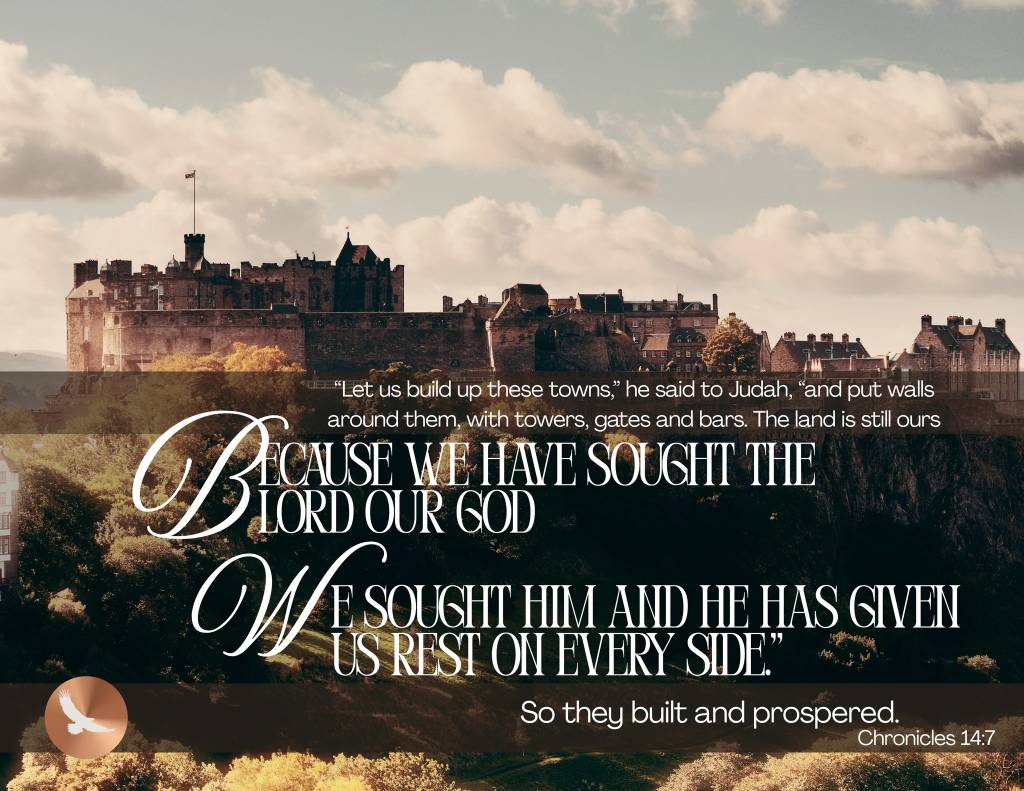
2 Chronicles 14:7 shows us that peace also means preparation, strength, and trust in the Lord.
Sometimes peace is active, not passive. It’s leaning on Him when life is loud and uncertain, knowing He is our strong tower.
Peace is not when everything is quiet—it’s when our hearts are still in Him.
May you rest in the Lord this morning.
Life can get busy and overwhelming, but God’s Word reminds us to pause and realign our hearts. We’ll share a short devotional to encourage, challenge, and uplift you a handful of times per week. Let’s grow together as we draw closer to Him!
Today lets pull into a question and message from Pastor Roger:
Do we focus more on the bad than the good? Do we see the cup half full or half empty?
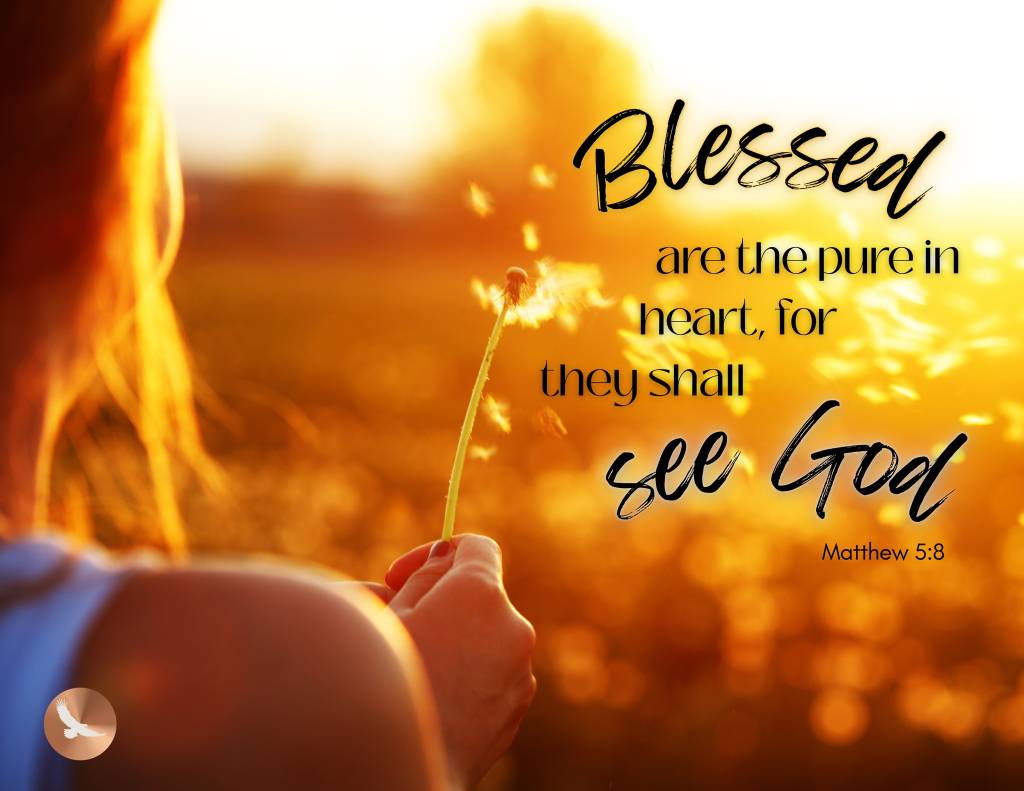
Jesus reminds us in Matthew 5:8, “Blessed are the pure in heart, for they shall see God.”
When our heart is set on Him, our perspective changes. Instead of counting troubles, we count blessings. Instead of despair, we see hope. Friend, I don’t know about you—but my cup isn’t just half full, it’s running over with His goodness!
I want to challenge you today to think about 3 blessings you currently have and thank the Father for them.